From a savings jar to an actual savings plan: what I wish someone had told me
A tin box, a ₹50 note and a boring table that changed how I look at money.
Farhan ShaikhDropper Sample
29 Sept 2026 · 5 min read
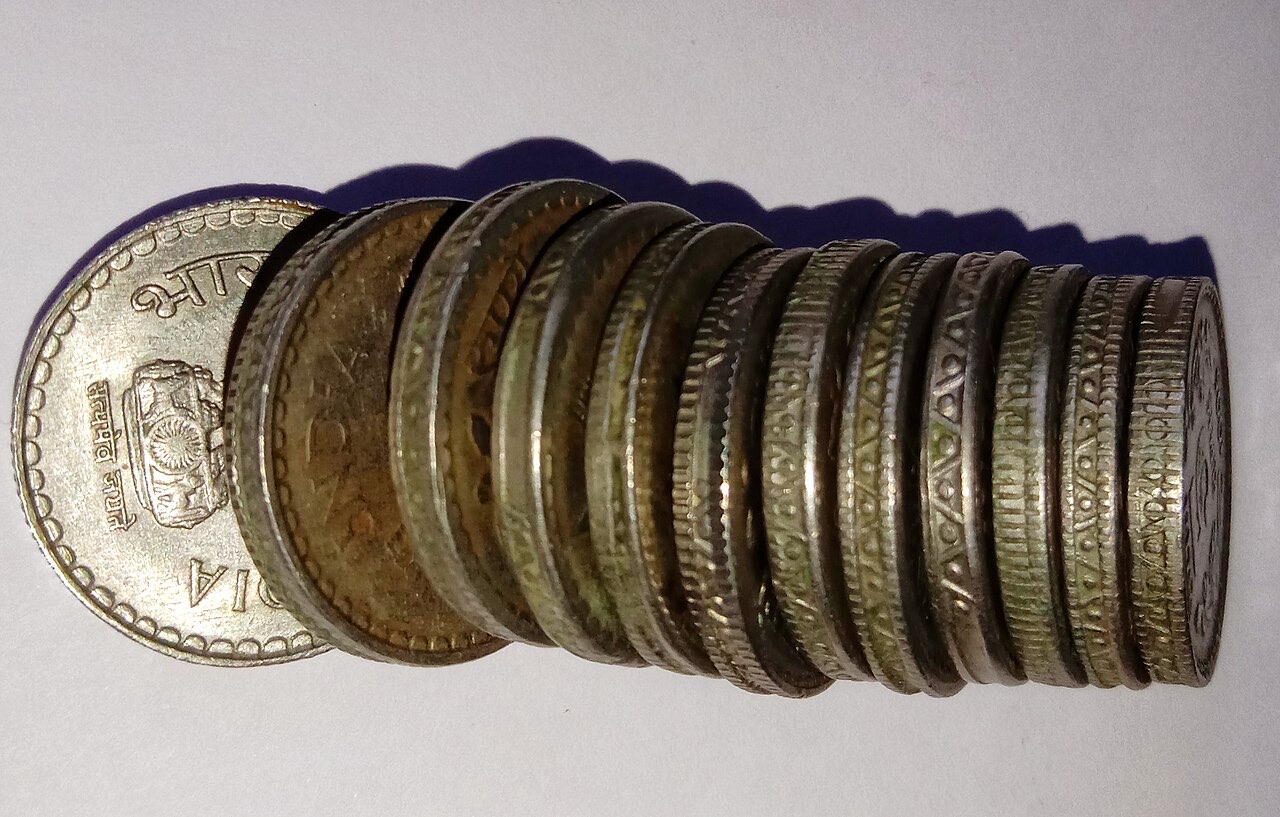
Photo: Billjones94 · CC BY-SA 4.0 · via Wikimedia Commons
I'm going to start with a tin box. It used to hold biscuits. Now it sits on a shelf in my room and holds coins and the occasional crumpled ₹50. For almost two years it was my entire "savings strategy": whenever I had spare change, in it went.
By the time I opened it last Diwali, it had ₹1,870. I was proud. I also had a sudden feeling that I'd done it all wrong, because I could not tell you where any of it had come from, and I'd also spent about three times that amount on things I couldn't remember. The jar had been working only because it was hard to open. That's not a plan, that's an obstacle.
So I made a plan. A boring one. This post is about that, and I want to be clear upfront: I'm a student with a small monthly allowance, in a drop year, so these numbers are small and honest. If you're expecting investing tips, this is not that. I'm not qualified and I'm not going to tell you what to buy.
Step one: know what comes in
My monthly money is a fixed amount from home, plus a little extra when I help a cousin with his online forms. Let's call the regular amount ₹3,000 for easy sums. (It's not the real number, but the method works with any number.)
Money in, boring but important: fixed amount + occasional extras. I count only the fixed part for planning. The extras are a bonus, and I'll come back to what to do with them.
Step two: know what goes out
I wrote down everything I spent for one full month. Not a perfect job: I forgot some chai, I forgot a few things. But it gave me a rough shape:
| Category | What it covered | Per month |
|---|---|---|
| Food outside the mess | Snacks, chai, one weekend treat | ₹1,000 |
| Study stuff | Pens, photocopies, test series printouts | ₹600 |
| Travel | Auto, bus, metro | ₹400 |
| Phone | Recharge | ₹300 |
| "Random" | Things I couldn't classify | ₹500 |
| Total | ₹2,800 |
So I was leaving ₹200 a month "free" without noticing. And the "random" line? Five hundred rupees that I could not explain. That is where money goes to hide.
Step three: pay yourself first
This is the whole idea in four words. Don't save what's left. Save first, spend what's left.
When I tried "save what's left", the left was always zero, or the jar. When I switched it around and moved ₹300 into savings on the day my money arrived, the other things adjusted by themselves. I just ate one less roadside plate a week. I survived.
The key is the number has to be small enough to be realistic. I started at ₹300, not ₹1,000. A plan I can follow is worth more than a heroic plan I drop in week three.
Step four: give each rupee a job
I split the ₹300 into two parts:
- ₹200 for the "slow money": anything big I want later, like a good pair of shoes or a second-hand book rack.
- ₹100 for the "emergency tin": for when a phone screen cracks or a friend needs help and I'd feel terrible saying no.
The emergency tin is the old biscuit box. I kept it, but now it has a job.
What a year looks like
If I do this for twelve months, with ₹300 each month, simple multiplication gives:
Not huge. But it's more than the jar gave me in two years, and it's planned. If I put the ₹200 slow-money part in a bank recurring deposit (RD) or just a savings account, I'd earn a bit of interest on top. Interest rates change over time and vary between banks, so I'm not going to quote one. But I can show you what the idea of compounding means with a number I'm making up, only for sums:
If you keep ₹10,000 somewhere that gives 6% a year, and the interest is added to the amount once a year, then after 2 years:
So you earned ₹1,236 without doing anything. In the second year, interest was calculated on ₹10,600 and not on the original ₹10,000, and that's the compounding. It sounds small. It becomes interesting when the amounts get bigger and the years get longer. That's also why starting small and early matters more than starting big and late.
(That number is only for the formula. Real rates are different, so don't treat it as a promise.)
Extras go to a different place
Remember the occasional extra money from helping my cousin? I decided that 50% of any extra goes straight to the slow money and the rest I can spend guilt-free. This part is important. If every rupee is controlled, you'll quit in a month. Having a "free to waste" slice made the plan survivable.
Three honest problems
- I broke the plan in month two. A friend's birthday and a sale on books. I took ₹200 out of slow money. I put it back the next month and didn't beat myself up.
- Tracking is boring. I use a pocket notebook, five minutes on Sunday. No app.
- Everyone around me spends more. My roommates order food at night. I say no sometimes, I say yes sometimes. I'm fine.
What I'd say to a younger student
You don't need to be good at maths. You need to look at your numbers once a month. That's the only skill. The jar was never the problem; not looking was.
If you have a system that works for you, even a jar with rules, I'm curious. Drop it below.
12 responses
Sign in to join the conversation.
[+][–]Ishita GoyalDropperSample· 21d ago
Love this!! The table of categories is exactly how I started too. One tip from my planner life: put the "random" line on a leash. I give mine a fixed cap each month, and when it's finished it's finished. You'd be surprised how quickly it stops growing 😄
[+][–]Farhan ShaikhDropperSample· 20d agoAuthor
the leash idea is good. I'll cap mine at ₹300 next month and see.
[+][–]Vivek Mishra12thSample· 20d ago
This is helpful for me. I get very little money from home, so I never thought savings was for me. But ₹300 out of ₹3,000 is not too hard, I think I can try ₹100 first. Thank you for saying "small and honest."
[+][–]Farhan ShaikhDropperSample· 20d agoAuthor
₹100 is a perfectly good start, vivek. The habit matters more than the amount. Let it be boring for three months.
[+][–]Dev Agarwal12thSample· 20d ago
Good post. One small correction for the interest part: the formula is for interest added once per year. If a bank adds interest quarterly or monthly, you'd get slightly more, and the formula changes to where n is the number of times per year. Also, in an RD the money goes in monthly so each deposit earns for a different time, so it's not exactly the same as a lump sum. Your example is fine for explaining the idea, just wanted to make it clear for people who try it on their own deposit.
[+][–]Farhan ShaikhDropperSample· 20d agoAuthor
yes thanks dev, I should have said that the 2 year lump sum is simplified. RD calculates differently. Good that you added it.
[+][–]Mehak AroraDropperSample· 20d ago
"A jar works because it's hard to open, that's not a plan, that's an obstacle." I laughed and then felt attacked 😂 My money is also in a jar, a pink one. Maybe I need to make rules now.
[+][–]Siddharth RaoDropperSample· 20d ago
As a dropper I'd add: money stress in a drop year is quiet but real. Every month you know your parents are paying for a year that isn't guaranteed. When I started tracking spending, I felt less guilty because I could see I wasn't wasting it. Numbers calm the guilt. Good post.
[+][–]Kavya NaikDropperSample· 20d ago
Same, anna. Amma once asked me for "just a small idea" of where the month's money goes and I handed her my notebook. She looked so relieved. We never talk about it otherwise.
[+][–]Aman YadavDropperSample· 20d ago
Pay yourself first is correct. Do it on day one of the month. Not day ten. By day ten the money is gone.
[+][–]Lakshmi TripathiDropperSample· 19d ago
I like the ₹100 emergency tin. I had one too, and it saved me when my bus pass got lost and I had to buy a new one the same day.
[+][–]Rahul DubeyDropperSample· 19d ago
Three attempts in, I'll say this: the best financial habit I picked up is not borrowing from friends. When I need ₹200 I'd rather skip a treat. Borrowing changes the way you sit with someone. Your tin handles that. Good thinking.