Carbonate and sulphite both turn lime water milky in salt analysis, how do I tell them apart?
Farhan ShaikhDropper Sample
9 Oct 2026 · 1 min read
Practising anion tests in my notes (can't afford a lab at home so I make flow charts from the book). I hit a wall at the dilute H2SO4 group.
When I add dilute sulphuric acid to a salt, a colourless gas comes off and passes through lime water, turning it milky. The textbook says this can be CO2 from a carbonate. But sulphite also gives SO2, and SO2 also turns lime water milky. And if I bubble in more gas, in both cases the milkiness disappears. So lime water alone can't be the answer.
What is the extra test? I read that SO2 does something to potassium dichromate paper or permanganate but I mixed up the colours.
Also, I want one quick list of which anions fall into the dilute H2SO4 group and which into concentrated H2SO4 group with the gas or colour seen for each. I have the first group in my head (carbonate, sulphide, sulphite, nitrite, acetate) but the second one I always forget. And can a barium chloride test help to separate carbonate from sulphite?
I don't have a teacher who explains this, so a reliable step by step would help a lot.
7 answers & replies
Sign in to join the conversation.
[+][–]Pooja Iyer12thSample· 10d ago
SO2 gas has a sharp smell, like burning sulphur (a match just struck). CO2 has no smell. And SO2 is a reducing agent, so:
- acidified paper turns from orange to green (Cr(VI) reduced to Cr(III))
- acidified solution loses its pink/purple colour (Mn(VII) to Mn(II))
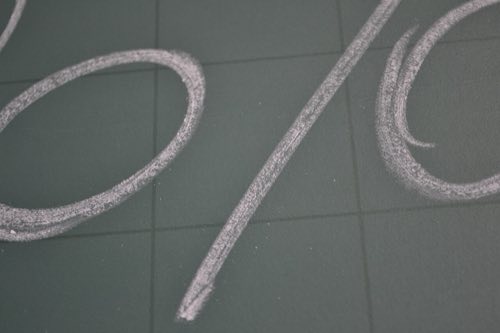
CO2 does neither. That's your test. Both do turn lime water milky: and . With excess gas the solid dissolves as the hydrogen salt in both cases.
[+][–]Farhan ShaikhDropperSample· 10d agoAuthor
Thanks pooja, orange to green for dichromate, pink to colourless for permanganate. Pinning that on my wall.
[+][–]Diya Menon11thSample· 10d ago
omg wait, doesn't CO2 also decolourise KMnO4? I thought any gas that comes from acid + salt does that 😅 i might have mixed it up
[+][–]Zoya Khan12thSample· 10d ago
No, Diya. Permanganate is decolourised only by a reducing gas, and CO2 is not one: carbon is already at its highest oxidation state (+4) in CO2, so there is nothing for permanganate to oxidise. SO2 has sulphur at +4, which can go up to +6, so it acts as a reducing agent and decolourises it. Same logic for the dichromate paper. Reducing gas gives colour change, CO2 gives none.
[+][–]Diya Menon11thSample· 10d ago
ahh makes sense, reducing gas only. thanks zoya! 💛
[+][–]Rahul DubeyDropperSample· 10d ago
Your list, with what to look for.
Dilute H2SO4 group
- Carbonate: CO2, odourless, lime water milky
- Sulphide: H2S, rotten egg smell, turns lead acetate paper black (PbS)
- Sulphite: SO2, burning sulphur smell, dichromate paper green
- Nitrite: reddish-brown fumes of NO2 (colourless NO from the acid turns brown in air)
- Acetate: vinegar-like smell
Conc. H2SO4 group
- Chloride: colourless HCl gas, white fumes with ammonia
- Bromide: reddish-brown bromine vapours
- Iodide: violet vapours of iodine
- Nitrate: brown fumes of NO2, strengthened when Cu turnings are added
[+][–]Vivek Mishra12thSample· 10d ago
Barium chloride alone won't separate carbonate and sulphite. Both give white precipitates, and , and both dissolve in dilute HCl with evolution of gas (CO2 in one case, SO2 in the other). Only sulphate gives a white precipitate that does not dissolve in dilute HCl. So BaCl2 is for sulphate. To tell carbonate from sulphite, use the gas tests above.