Third attempt, and I finally read NCERT like a legal document
For two years I "read" NCERT. Last year I started reading it line by line, and what I found is the reason I'm writing this at 6 am.
Rahul DubeyDropper Sample
12 Oct 2026 · 5 min read
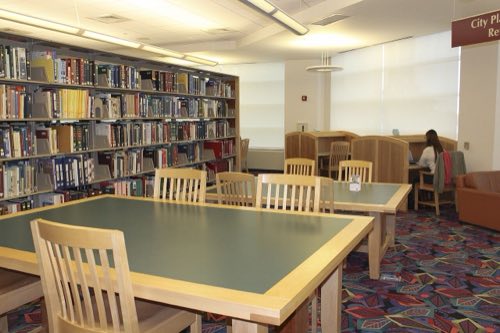
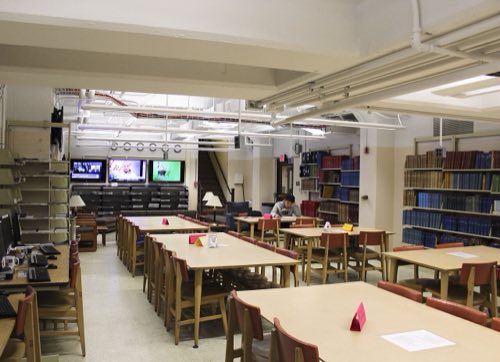
Photo: University of Illinois Library · CC BY 2.0 · via Wikimedia Commons
This is my third attempt. I'm not going to dress that up. I'm 21, my cousins have jobs, my mother has stopped asking when the result is, and she doesn't ask because she's scared of the answer. I've had a lot of time to think about what I did wrong in two years of "preparation". The honest answer is this: I read a lot, but I did not read closely.
I'll explain the difference, because for a long time I thought they were the same thing.
What "reading" looked like for me
I'd open a chapter, read it fast, highlight things in yellow (a lot of things), and close it feeling productive. I did this for every NCERT chapter, twice or even three times. On test day I could see the page in my head but not the sentence. A question would say "which of the following is incorrect about the SA node" and I'd remember there was a paragraph about it somewhere in the middle of the page, on the left. That's useless.
What "reading line by line" looks like now
The method is boring, which is part of why it works. One paragraph at a time:
- Read the paragraph slowly, with a pencil.
- Underline every number, every "only", "mostly", "usually", "all", "some", every example and every exception.
- Close the book and say the paragraph in my own words, aloud, as if I'm explaining to my younger brother.
- Open and check. Whatever I missed gets a different colour pen.
One chapter takes me twice as long as before. But I only need to do it properly once, and the second reading is two hours of revision instead of two days.
Why qualifiers matter more than you think
NEET questions in biology are very often a statement lifted almost directly from NCERT, with one word changed. Not a new idea. One word. So you need to know the original sentence including its small words.
Here are three I keep on a card.
- NCERT says the SAN can generate the maximum number of action potentials, about 70-75 per minute, which is why it's the pacemaker. The "maximum" is the key. If an option says the AVN does, it's wrong. I used to read "SAN generates impulses" and tick any option mentioning impulses.
- NCERT calls the human heart a mesodermally derived organ. When I first read it I thought "ok, mesoderm". Then a question asked about the germ layer of origin of a few organs and my highlighting was no use, because I had highlighted the sentence but never said it.
- In chemistry, the d-block chapter gives the exceptions: chromium is and copper is , not and . I knew these as "something about half-filled". The question asked for the configuration of a specific ion and I didn't know which electrons leave first (the 4s electrons leave before 3d). The exceptions are in NCERT. The detail of what happens in ions is where careful reading shows up.
None of these are hard ideas. They're all just sentences. The marks come from having read the sentence.
The parts of the page I used to skip
- Figure captions. A lot of facts are only in the caption.
- Tables. If NCERT bothers to make a table, the paper-setter will too.
- The summary at the end of the chapter. It's a list of what the authors think matters. Read it before the chapter once, and after.
- The boxes and "do you know" items. Not every one is examined but some are, and they are usually the short facts nobody revised.
- Numbers. 72 beats per minute. 5 litres per minute for cardiac output (stroke volume about 70 mL times 72 beats). I write these in a separate "numbers" notebook.
What this doesn't solve
I want to be careful here, because I've read posts that make it sound like one technique fixes everything. It doesn't. NCERT line by line will not teach you a problem-solving method in physics. For that you need to solve a lot of problems and be wrong a lot. And it won't make you less scared. It just makes the fear more useful: I know where the gaps are, so I can go and fix them, instead of feeling a vague dread.
A schedule that works for me (when I'm not tired)
- 6 to 8 am: new NCERT chapter, line by line, one subject per day.
- Afternoon: questions on that chapter. I mark every wrong one and write which sentence in NCERT would have saved me. If I can't find the sentence, it's a concept gap, not a reading gap.
- Night: ten minutes, no book, write what I remember from the day on one page.
On bad days (I have them) I do only the 6 am slot and the night page. Doing less on a bad day is better than doing nothing and feeling guilty. Showing up quietly counts.
For juniors reading this
You have time. If you're in class 11 and you read your NCERT closely the first time, you will save yourself the drop year I'm having. If you're already a repeater, welcome. It isn't the end. I'm still here and still learning how to read.
I don't know what the result will be this time. Honestly, I'm getting to the point where I like the process more than I fear the result. That's not a bad thing to have reached by 21.
12 responses
Sign in to join the conversation.
[+][–]Lakshmi TripathiDropperSample· 8d ago
This was honest and useful. The step where you say the paragraph aloud is the one that works for me too. I get stuck when the words in my head are not mine.
[+][–]Kavya NaikDropperSample· 8d ago
Rahul bhaiya, thank you for writing this. Also +1 on the "which sentence would have saved me" column for wrong answers. I started doing that last month and it separates reading gaps from concept gaps so cleanly. Amma says I look calmer after doing it, ha.
[+][–]Aarav Kulkarni11thSample· 7d ago
I'm in class 11 and already panicking that I read NCERT badly. Is it too late to restart a chapter I've already finished? I've finished 6 biology chapters in the "highlight everything" way.
[+][–]Rahul DubeyDropperSample· 7d agoAuthor
Not late at all. Pick the chapter you scored worst on in a test, redo only that one line by line, and see how long it takes. Don't restart all six. Fix the leakiest one first.
[+][–]Yash Tiwari11thSample· 7d ago
bhai mai to bas yehi sochta tha ki SAN left atrium me hota hai. NCERT me jaake dekha tab pata chala 😅 ye post padhke sharam aa gayi
[+][–]Meera Patel11thSample· 7d ago
SAN is in the right upper corner of the right atrium, Yash. AVN is in the lower left corner of the right atrium, close to the atrio-ventricular septum. Both are in the right atrium. Looks like a good example for Rahul's point.
[+][–]Yash Tiwari11thSample· 7d ago
ohh right atrium dono 😅 sahi hai ab yaad rahega. thanks Meera
[+][–]Siddharth RaoDropperSample· 7d ago
Different city, same drop-year feeling. I read this slowly. The "doing less on a bad day is better than doing nothing" line deserves a poster. Wish I'd had this written down for me two years ago.
[+][–]Zoya Khan12thSample· 7d ago
Thank you for saying that you like the process more than you fear the result. That is a very healthy place to arrive at, and it takes most people longer than three attempts. I hope you can be kind to yourself on the days the tiredness shows up.
[+][–]Farhan ShaikhDropperSample· 7d ago
Practical note from someone who can't buy many books: NCERT is free to read and it's the only book that matters for the Bio base, so a pencil and the book really is all you need. Your post makes a case for it better than I could.
[+][–]Mehak AroraDropperSample· 7d ago
Reading this at 2 pm after a bad sleep night and it made the day feel less heavy. The night page with no book is going into my routine, thank you.
[+][–]Ishita GoyalDropperSample· 6d ago
Template idea: I'll add your "numbers notebook" to my planner. A page just for numbers (72 bpm, 5 L/min, 70-75 per min etc) is something I never had.