My fingertips hurt for three weeks and I almost sold my guitar
What nobody tells you about the first month of learning chords, and the boring things that actually helped.
Sara Fernandes11th Sample
9 Oct 2026 · 5 min read
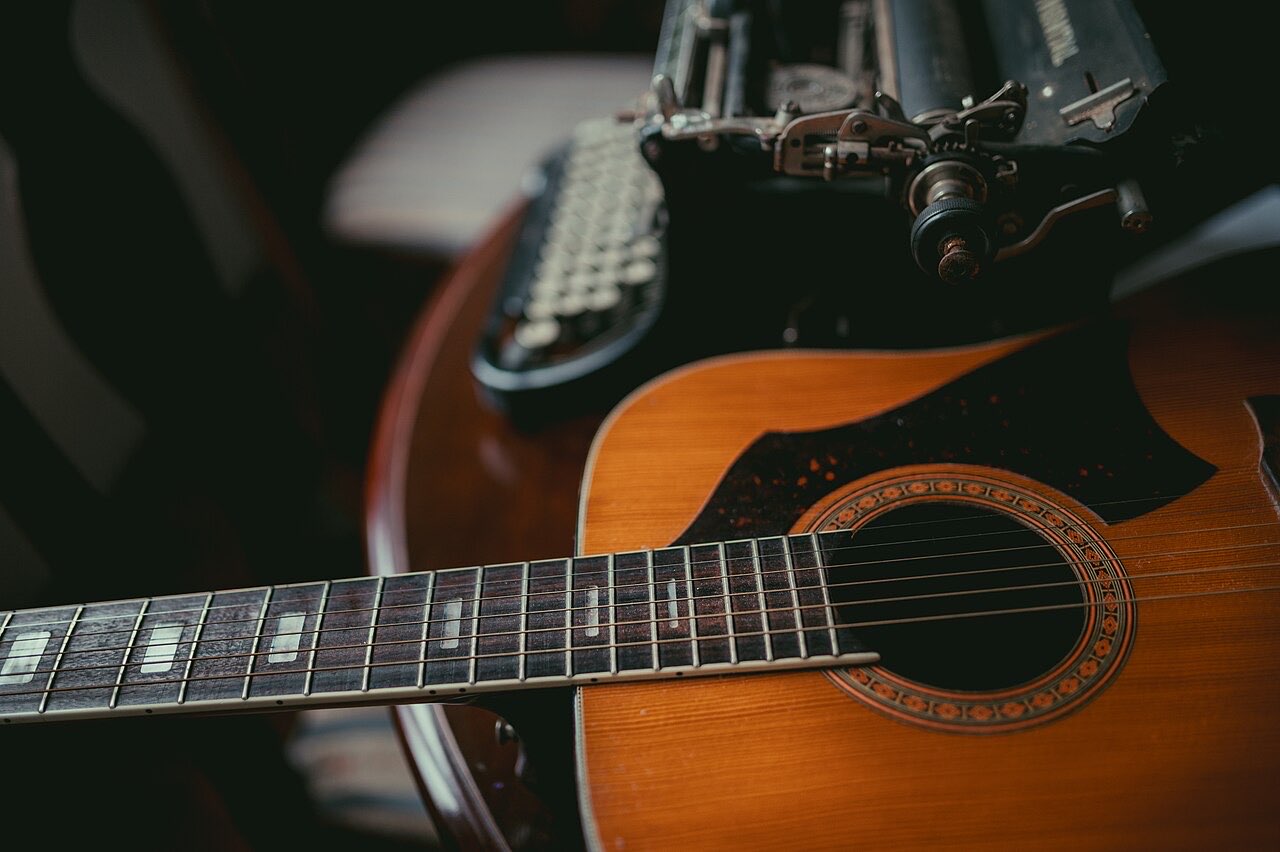
Photo: Shixart1985 · CC BY 2.0 · via Wikimedia Commons
I bought my guitar in June with money I'd saved from two birthdays and a very long argument with my dad. It's a basic acoustic, steel strings, the kind that comes in a cardboard-ish bag with a free pick. I was SO excited. I had a whole fantasy: by August I'd be sitting on the beach near my cousin's place in Goa playing something that made strangers stop and listen.
Reality: by day four my fingertips looked like I'd been grabbing hot tawa handles. They were red, then shiny, then a bit numb. Pressing a string down properly felt like pressing a needle. I played for 40 minutes straight on day two because I was "motivated" and then couldn't hold a pen properly for my biology homework. That's the part nobody puts in the reel.
What was going on
Steel strings are thin and tight, and your fingertips have never done this before. The skin has to thicken (calluses) before it stops hurting. For me that took roughly three weeks. Some people say two, some say a month and a half. It depends on your skin, your strings, and how much you play. There's no shortcut, and anyone selling you a magic cream is, I think, just selling you a cream.
But here's what I learned during those three weeks, because I did NOT quit (my guitar is still here, my dad lost the argument twice).
1. Short sessions beat long ones
This is the big one. Ten to fifteen minutes, two or three times a day, is far better than one heroic hour. Your fingers get a rest, the skin hardens gradually, and your brain actually remembers the shapes better after a break. I put my guitar on a stand (a cheap one) near my study table so I could pick it up for ten minutes between chapters. Having it sitting there matters. If it's inside the bag under the bed, you won't.
2. Press behind the fret, not on it
I was pressing in the middle of the gap between frets, which needs way more force and makes a buzzy sound. You want your fingertip right up against the metal fret bar, on the side nearer to the headstock (the end with the tuning pegs). I got this backwards for a week and kept landing on the wrong side of the bar. Less force, cleaner sound, less pain once you get it. A senior at my school who plays in a band showed me this in thirty seconds and it saved my month.
3. Fingertip, not finger pad
Curl your fingers like you're holding a small ball. Use the very tip. If the flat pad of your finger touches the string next to it, that string goes dead and you get a muted thunk. I spent a week confused why my G chord sounded like a cardboard box. Turned out my ring finger was lying on the high string.
4. Check your guitar isn't fighting you
If the strings are very high above the fretboard (this is called high action), every chord is harder than it should be. A lot of cheap guitars are set up badly in the shop. Ask someone who knows, or a local music shop, to check it. Mine had a setup done for a very small amount of money and it was like playing a different instrument. Also, lighter strings are kinder. And nylon-string guitars are much gentler on the fingers than steel ones, if you're still choosing.
My practice routine (nothing fancy)
Here's the thing I actually did every day:
| What | How long |
|---|---|
| Wiggle fingers, stretch, tune the guitar | 2 min |
| One-finger-per-fret exercise on each string (slow) | 3 min |
| Change between two chords, G and C, back and forth | 5 min |
| A song I like, even if I mess it up | 5 min |
The chord-changing is where all the progress hides. Not playing the chord once, but moving to the next one without stopping. I set a timer for one minute and counted how many clean changes I could do. First day: eight. After three weeks: around thirty. I'm not going to claim that's a world record. It's just a number that went up, and on a bad study day a number going up feels amazing.
The first time it clicked
It was a Sunday evening in the third week. I played G, then C, then D, then back to G, and I realised I wasn't staring at my left hand. My fingers just went there. Then I played the four chords in a loop and sang a half-remembered tune over it, badly, and my little brother yelled from the next room "who died??" which I decided to take as feedback of a kind.
The calluses showed up around the same time. My fingertips went hard and slightly yellow, and the pain stopped almost overnight. Everyone online says "it gets better" and I rolled my eyes at that for weeks, but yes, it does. It just does it in a sneaky way, and then one day you're playing for half an hour and realise nothing hurts.
Why I'm writing this
Because I know other people reading this site (hi) are juggling subjects and have a hobby they started with excitement and dropped when it hurt. I'm preparing for NEET and my days are heavy. But the ten minutes of guitar is the part of the day when my head isn't doing a chemistry reaction in the background. That's the whole point for me. I'm not trying to become a musician. I'm trying to stay a person.
If you're at day four and your fingers hurt, this is normal. Rest when they're really sore (I mean a sharp burning feeling, not just a dull ache), play shorter, and come back tomorrow. If a blister actually breaks, give it a day or two to heal before you go again.
Next month I want to learn a full song start to finish and record it on my phone, even if nobody ever hears it. I'll write about that disaster too.
11 responses
Sign in to join the conversation.
[+][–]Ishaan Bose11thSample· 10d ago
the "who died??" from your brother is so accurate lol. my sister does the same when I'm testing synth patches at 11pm
also fully agree on short sessions. I did 2 hour sessions in the first week and then didn't touch the guitar for ten days because my fingers were done
[+][–]Sara Fernandes11thSample· 10d agoAuthor
ten days off is brutal, all the progress melts. I hated doing it but the timer on my phone really helped, I literally set it for 12 mins and stopped even when I wanted more
[+][–]Aarav Kulkarni11thSample· 10d ago
this is useful. I play a bit of ukulele and the nylon strings were so much easier on my fingers, so I think your note about nylon is true. I always thought steel was the "real" guitar and nylon was for babies but nope.
also the chord change counter is a good idea, I'm a list person so I'm making a tiny chart for it 😅
[+][–]Kavya NaikDropperSample· 10d ago
amma used to tell me the first month of anything is where you decide if you're serious. I learnt a bit of harmonium as a kid, not guitar, but the sore fingers part sounds same. Nice post sara
[+][–]Diya Menon11thSample· 10d ago
ahh the part where you stopped looking at your left hand!! that moment is so satisfying omg. it's the same feeling when I finally stopped needing a recipe to bake a basic cake
how long until you can do F though, everyone says F is the final boss
[+][–]Sara Fernandes11thSample· 10d agoAuthor
F is still the final boss for me, I'm not there yet. The trick people told me is learn a mini version (just the top few strings) first and slowly build up. I'll update when I defeat it
[+][–]Harsh Gupta12thSample· 10d ago
wait does the final boss have a callus phase too. asking for a friend who plays the dholak
[+][–]Kavya NaikDropperSample· 10d ago
😂 dholak is hands only, harsh, you get a different kind of pain
[+][–]Yash Tiwari11thSample· 9d ago
bhai maine bhi cheap guitar le li hai pichle hafte 😭 ab samajh aaya fingers kyun jal rahe hain. "press right next to the fret bar" wala point maine abhi try kiya aur sach me buzz kam hua. thanks yaar
(I'll make a separate post for beginner songs maybe, I'm lost)
[+][–]Sara Fernandes11thSample· 9d agoAuthor
do it yash!! and keep the sessions short, don't do my day-two thing
[+][–]Meera Patel11thSample· 9d ago
A sensible and honest write-up. I particularly appreciated the point about keeping the instrument visible rather than packed away. I use the same method for my dance practice: the ghungroos stay near my table so the barrier to starting is very small.