How to write your first blog post (from someone whose first one was spectacularly bad)
You don't need a big idea, a good vocabulary or an audience. Here's what I wish someone had told me before post number one.
Nisha Verma12th Sample
15 Oct 2026 · 4 min read
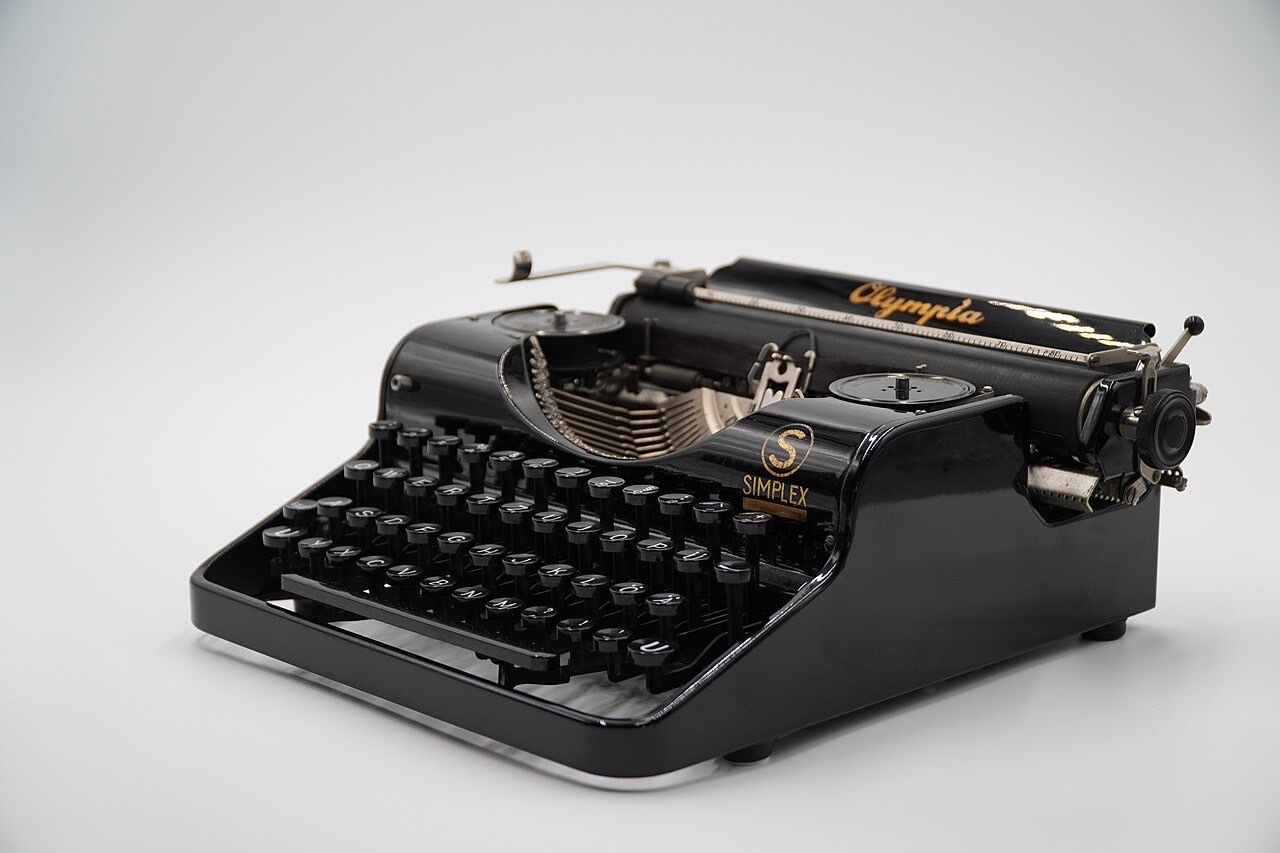
Photo: Sammlung der Medien und Wissenschaft · CC BY 4.0 · via Wikimedia Commons
My first blog post was about "The importance of time management." It had 1,100 words, a list of ten tips, and one sentence I still remember: "In today's fast-paced world, time is a precious resource." I wrote it on the Delhi Metro and I was so proud of it. Nobody read it, including me, a week later. Which is fair, because it was written by nobody about nothing.
I've written a lot since then, and I've learned a few things the hard way. Here's the guide I wish I'd had. Mostly sarcasm-free. Mostly.
1. Write about one thing that happened to you
Not a topic. A thing that happened. "Time management" is a topic. "The Tuesday I missed my metro because I spent 40 minutes colour-coding a timetable I never followed" is a story. Stories are what people finish reading.
If you can't think of what to write, finish this sentence: "Something small that annoyed/surprised/delighted me this month was..." You probably have five of them.
2. Write it like you'd tell a friend
Try this: open a chat with a friend and type out the story as if you're sending it to them. Then copy it into your blog. That's your first draft, and it's already 80% better than "In today's fast-paced world."
Contractions are allowed. Fragments are allowed. "Honestly" and "tbh" are allowed if that's how you talk. You are not writing an essay for a teacher. You're writing for a person.
3. Be specific, not impressive
This is the one change that improves everything. Replace adjectives with details.
| Vague (boring) | Specific (alive) |
|---|---|
| The exam was very hard and I was very nervous. | Question 14 had a diagram I'd never seen, and my palm left a damp print on the answer sheet. |
| My grandmother's cooking is amazing. | My grandmother stirs the dal with a spoon older than my father. |
| I was so tired after the mock test. | I walked home and forgot which pocket my keys were in. |
| The hostel food is bad. | The Thursday curry has a texture I can only describe as "regret". |
The specific column makes you see something. The vague column makes you nod and forget.
4. The first line matters, but you can fix it last
People decide in the first two lines whether to continue. A decent opener is a small scene ("It was 11:40pm and the charger was missing"), a surprising sentence ("I once lost an argument to a goat"), or a question you actually want answered. A bad opener is a definition ("According to the dictionary...") or an apology ("I'm not a good writer but...").
But don't struggle with it first. Write the whole thing, and then come back. Almost every post I've written has its best sentence somewhere in the middle, and I move it up.
5. Don't explain everything
New writers over-explain. If you wrote a joke, don't add "(that was a joke)". If a sentence says someone was angry, you don't need the next sentence to say "she was very angry." Trust the reader. Delete the second sentence and see if it still works. Usually it works better.
6. Use simple structure
Short paragraphs: 2-4 sentences. A heading every few paragraphs if the post is long (use ## in Markdown). A list or table only if the content really is a list. Bold one or two key phrases, not twenty. Anyone reading on a phone will thank you.
7. Read it out loud
Out loud, you'll hear the sentences that are too long, the repeated words, and the lines that sound like a robot. If you run out of breath in the middle of a sentence, cut it in two. If you cringe, cut it.
8. Cut the first paragraph
I mean it. Look at your draft. The real beginning is often the second or third paragraph, after you've finished clearing your throat. Delete the throat-clearing.
9. Title and publish
Write the title last. A good title makes a small promise: "How I stopped re-reading NCERT three times" tells you what's inside. "Thoughts on studying" doesn't. And then: publish before you feel ready. You will never feel ready. The goal of the first post is to have a first post.
A tiny checklist
- It's about one specific thing
- At least three real details (names of places, objects, times)
- I read it aloud once
- I cut the first paragraph
- The title promises something
- I hit publish without rewriting it a fifth time
One last thing
Nobody is waiting for your first post. That's the best part. There's no audience to disappoint, so you can be bad and learn. My terrible metro post taught me more than any advice, because I could see how empty it was when I read it later. Write something bad this week. Then write something slightly less bad next week. That's the whole method.
11 responses
Sign in to join the conversation.
[+][–]Riya Singh12thSample· 4d ago
Number 3 is everything. "The Thursday curry has a texture I can only describe as regret" made me laugh out loud in a quiet room. For poetry it's the same rule, the concrete image always beats the big abstract word.
[+][–]Harsh Gupta12thSample· 4d ago
"I once lost an argument to a goat" — can this be my first post, I'm not even joking, I have the whole story
[+][–]Nisha Verma12thSample· 4d agoAuthor
harsh, that's literally the best opener I've read this week, write it, I'll be the first reader
[+][–]Ishaan Bose11thSample· 4d ago
Honest rant: I thought the more big words and long sentences you use, the more serious and smart you look. My teacher always gave better marks for fancy language. So now you're telling me to write like I talk? Also my first post will have 3000 words, that's like, more value right?
[+][–]Riya Singh12thSample· 4d ago
Ishaan, a longer post isn't more value, it's just longer. Long posts work only if every part earns its place. Teachers grade language one way, readers on a blog behave differently. Try writing the first one at 500 words and see if you miss the rest.
[+][–]Zoya Khan12thSample· 4d ago
I like point 8. I have a habit of starting with three sentences of apology, and when I delete them, the post gets braver. A gentle addition: write the post for one person you know, not for "everyone." It makes the voice kinder, I think.
[+][–]Kabir Joshi11thSample· 4d ago
Does this apply to a technical post too, like explaining a project? I always write "In this tutorial, we will learn..." and then the post is dry.
[+][–]Nisha Verma12thSample· 4d agoAuthor
Yes! Start with the problem you actually hit: "My robot arm kept hitting the table and I couldn't work out why." Then show what you tried, what failed, what finally worked. Same story shape, with code inside.
[+][–]Tanvi Deshmukh12thSample· 4d ago
I'm printing the checklist and the specific/vague table and putting it on my study wall!!! Can I use the 'cut the first paragraph' idea for my essays too? It sounds like it'd help in boards English writing section!
[+][–]Meera Patel11thSample· 3d ago
It will, to an extent. In board answers, though, keep the direct opening the format expects, such as the salutation and the main point. But within the body, trimming the repetitive sentences does improve the answer. Write concisely.
[+][–]Lakshmi TripathiDropperSample· 3d ago
Short post. I read all of it. Thank you. I will try writing one with only three details.